
Going Back to Go Forward
DC
Original article was created for Substack on 3/13/2026
On the words that diminish, the words that hold, and what we owe the people in our care.
I was getting ready for the hike in Poland when it happened.
The comment was small. It always is. “Do you have another sweater? You’ll be cold.” Said in love, I have no doubt about that. But landing, as it always does, like a gentle correction. Like I hadn’t quite gotten it right. Like I still needed managing.
I didn’t react the way I used to. Six months of a sabbatical and real inner work had changed something in my nervous system. The comment arrived and, for the first time I can remember, just passed through. I stayed warm. I stayed present. I let her love me in the language she had.
But sitting there, I found myself thinking about something else entirely.
How many leaders speak to their people exactly this way?
* * *
We do it without realizing. The small correction in the meeting, delivered in front of others, that was meant to help but landed as a verdict. The feedback that opens with what’s wrong before it ever acknowledges what’s right. The tone that says, underneath the words: I’m not sure you’ve got this. Let me fix it for you.
“Do you have another sweater?” is not malicious. Neither is most of the language that slowly erodes someone’s confidence at work. It comes from care, from high standards, from wanting things done well. But intent does not determine impact. And when the people we lead hear those messages, drip by drip, meeting by meeting, something happens to them. They get smaller. They stop bringing ideas. They start waiting to be told rather than trusting themselves to act.
We knock people down with our words far more often than we know. And we build them up far less than we think we do.
I spent time in Poland with family I hadn’t seen in nearly two decades. My cousin and I talked about generational patterns, how the way we were spoken to becomes, without our awareness, the way we speak. It travels. It repeats. It shows up in our relationships, our parenting, our leadership. Until someone interrupts the pattern.
That interruption is the work. And it doesn’t happen by accident.
* * *
My flight home had its own lesson waiting.
My connection from Kraków was delayed. I missed my onward flight from Amsterdam to Atlanta. A year ago, that would have been a controlled implosion, frustration at the counter, resentment worn like a coat through the whole evening, a bad mood inflicted on anyone nearby.
Instead, something different happened. I let it be what it was: an unexpected evening in a city I hadn’t seen since I was sixteen.

I reached out to a friend for recommendations. He gave me two places: a beautiful neighborhood café, and a no-frills bar near the red light district that locals actually go to. I walked out into the Amsterdam evening, canals lit and shimmering, weather just right, no agenda. A pint of cold beer. The best steak and fries I can remember. A long walk through streets full of life and color. Not a single moment of wishing I were somewhere else.
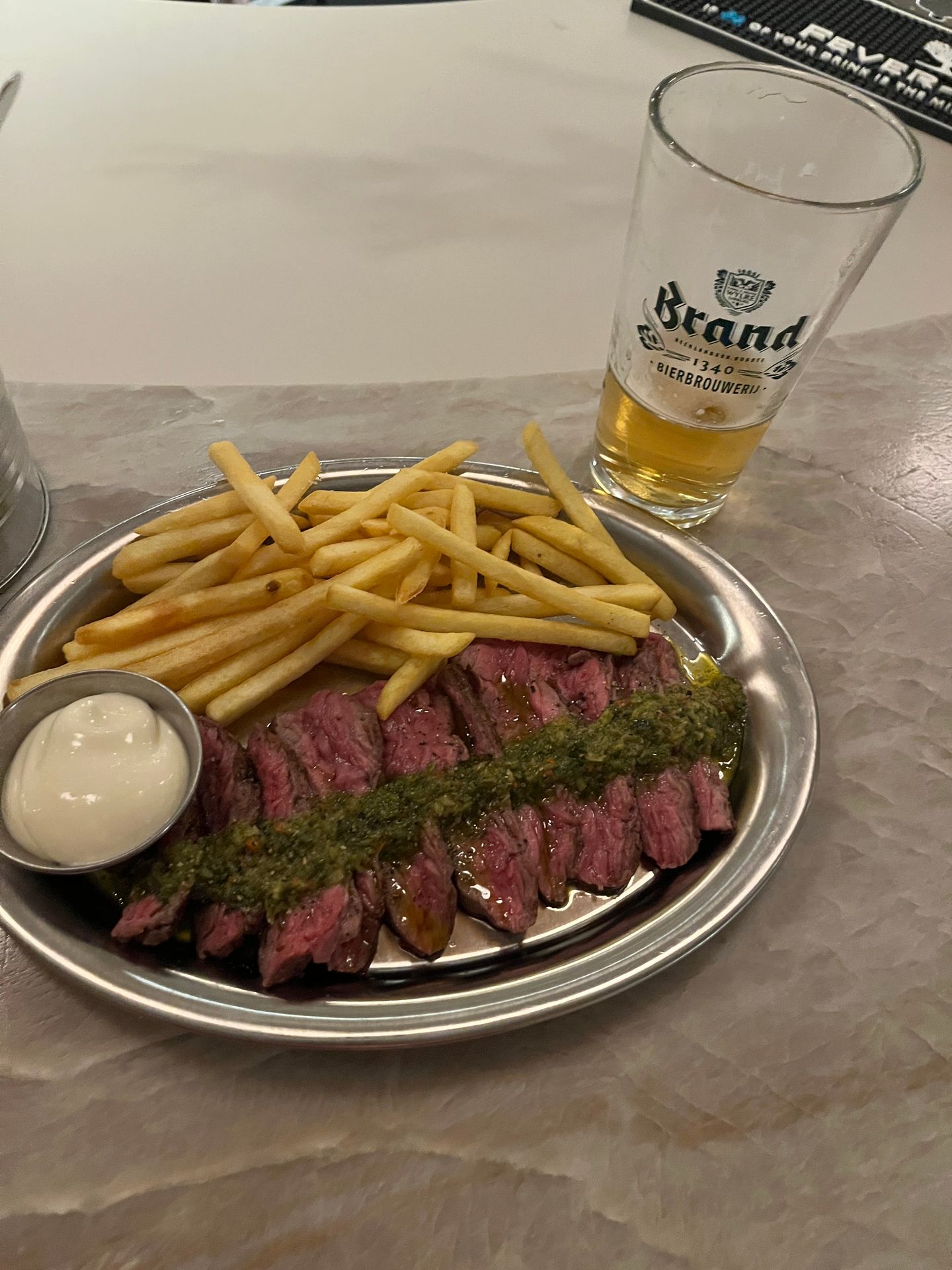
The next morning: a KLM comfort seat, good wine, ten hours to think. What had started as a disruption became one of the finest stretches of the whole trip.
This is what regulation looks like in practice. Not the absence of difficulty, the ability to meet it without resistance. And it is every bit as relevant to the way we lead as it is to the way we travel.
The leader who can stay steady when things go sideways, who doesn’t pass their anxiety down the org chart, who doesn’t make their team smaller with their reaction to a problem, that leader changes the room. They make it safe to bring bad news early. They make it possible for people to say “I don’t know” without fear. That is not a soft outcome. That is how organizations actually function well.
* * *
And then came the part that humbled me.
In the Amsterdam duty free, I had carefully chosen gifts, chocolates, cheeses, things picked with specific people in mind. I loaded the bag into the overhead compartment. I deplaned in Atlanta. I left the bag on the plane.
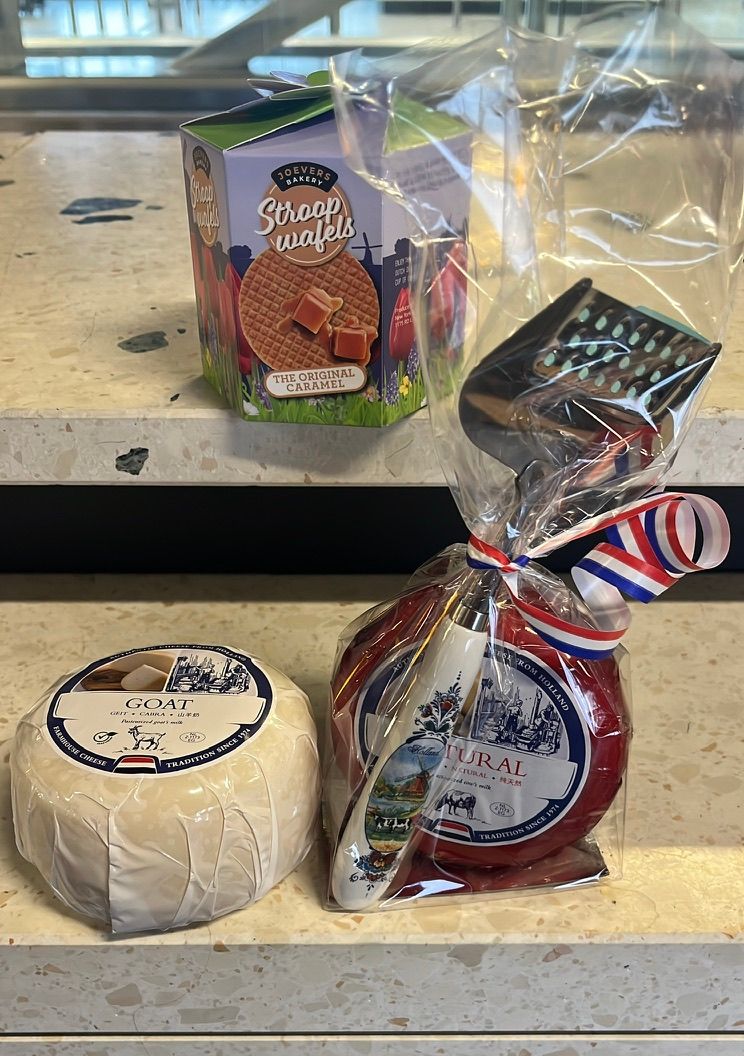
Forty-five minutes later, I knew what had happened.
I went to the KLM desk. They contacted the plane. The bag was already gone.
What followed was one of the most instructive leadership failures I have experienced as a customer. KLM pointed me to the airport. TSA sent me to domestic lost and found. Domestic lost and found said they don’t handle international arrivals. The phone numbers on KLM’s website looped to a booking agent who told me to check with local staff. Local staff sent me back to KLM. Every single person was polite. Not one of them owned the problem.
I spent two days trying to understand why this knocked me as flat as it did. The gifts themselves were replaceable. What I could not shake was what that experience felt like from the inside: helpless. Unmoored. Passed from desk to desk with the implicit message that my problem wasn’t quite anyone’s problem.
It is the organizational version of the sweater comment. Not unkind. Just absent. No one had been trained, or perhaps given permission, to stay in the room with a person who needed help and had nowhere clear to go.
Ownership is not a department. It is a posture. It is what you bring to the moment when someone is standing in front of you without a clear path forward. You don’t need to have the answer. You need to be willing to say: I don’t know either, but I am not going to hand you to someone else. We’ll figure this out.
Nobody said that to me at the Atlanta airport. It is a small thing, and also not a small thing at all.
* * *
I have been sitting with all of this since I came home. Amsterdam arriving like a gift I didn’t earn. The lost chocolates. The two days it took me to come back to myself.
What runs through all of it is the same thread: the words we choose, and the presence we bring, either build people up or quietly leave them smaller. At home. In the meeting room. At the service desk in a terminal.
Leadership is not a title. It is the accumulation of small moments whether you stayed, whether you steadied the room, whether the person in front of you walked away feeling more capable or less.
That is the work I care about. The kind that starts inside and extends outward. The kind that Anthilles was built to support, because no leader should have to figure out alone how to interrupt the patterns they inherited, and no team should be left standing in a corridor with nowhere to go.