
The Government Failed. The Workers Didn’t
DC
Original article written for Substack on 3.27.26
The Government Failed. The Workers Didn’t
It started with Bad Bunny.
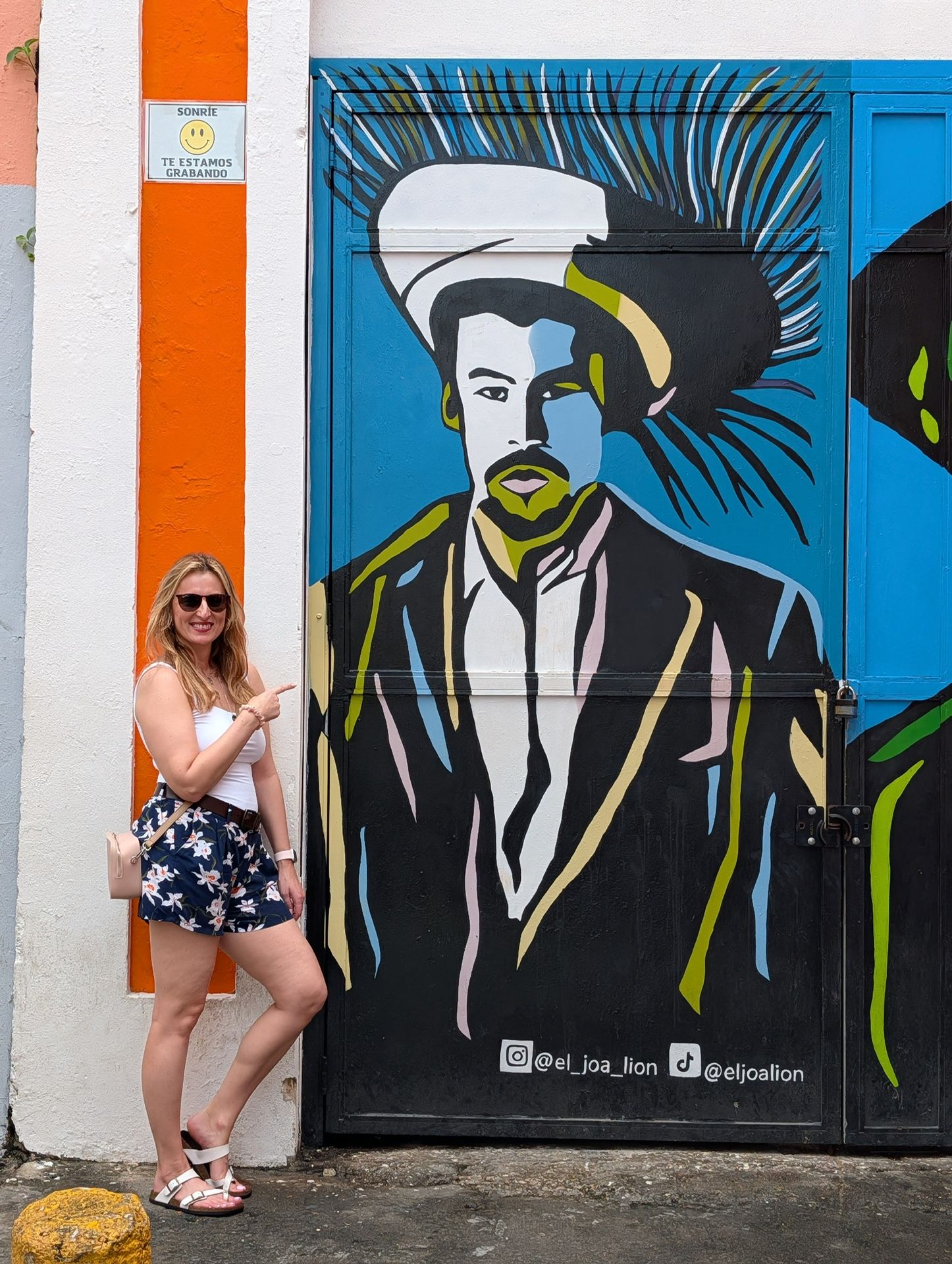
My husband and I were watching the Super Bowl halftime show, and somewhere in the middle of it, we looked at each other and realized we had never been to Puerto Rico. That felt wrong. The show was extraordinary, but it was also controversial, the way anything becomes controversial now when it asks you to remember that Puerto Ricans are American citizens, that the island exists, that it has been underfunded and overlooked and hit by storms and is still, somehow, standing. We didn’t want to just watch. We wanted to show up. We booked the trip.
What we didn’t know when we booked was that by the time we traveled, we’d be in the middle of a partial government shutdown. TSA workers, underpaid always, now unpaid, were leaving in numbers. Who works thirty days without a paycheck? The week before we left, the news was reporting three-hour lines, then four, then five, then six. And then, a few days before we flew, the new announcement: ICE agents would be stationed at airports.
We are both American citizens. That used to feel like a sentence that ended there. It doesn’t anymore. I grew up in post-communist Eastern Europe, in a place where the work of entire generations was built around one idea: this must never happen again. The Holocaust. The occupation. The slow dismantling of who people are allowed to be. History was not a subject we studied from a distance. It was a warning we carried close. The America I arrived in didn’t feel like that warning. It felt like its opposite. I don’t know how to explain what it is to watch that change, to absorb it in real time. It sits in the body differently than grief. It’s more like vertigo.
We arrived at five in the morning. The domestic terminal was already busy, so we walked it, assessed, and made a decision: international terminal, fifteen minutes away. When we got there, the crowd was larger than I expected. We needed to check a bag, which meant two lines: one for check-in, then TSA security. As we joined the first queue I was already scanning, already thinking about how to move through this efficiently. That’s when I noticed a sign: TSA Pre-Check holders could check bags in a separate lane as long as they had the right tag. I found a worker and asked, and mid-conversation she told me to move; they were just opening a new register. We were there in seconds, third in line, bags checked in twenty minutes.
Then came the TSA Pre-Check lane, which had become a general line that morning. We stood in it for a full hour, eating the sandwiches we’d packed before dawn, and honestly, we were fine. We were laughing. The line was long but it was moving, and something about that felt important. Despite everything, something was working.
And then we got to her. A TSA worker stationed near the scanning booths, not just standing there but announcing, passport out, boarding pass ready, laptops, shoes, liquids, and everything she said cut through the noise and actually landed. People knew what to do. People were doing it. The line kept moving because she was making it move, reading the crowd, adjusting, staying completely present to what the moment needed. I don’t know how to describe the quality of her presence except to say she was leading without a title, without any formal authority over anyone in that line and it organized everything around her. When I reached her, I stopped and touched her arm and said thank you. She smiled and kept moving people through.
One and a half hours after we arrived at that terminal, we were on the other side, walking, stretching our legs, finding somewhere to sit before the flight.
Here is what I kept thinking about afterward. This chaos was manufactured. It didn’t have to exist. It exists because of choices made by people with enormous power who do not understand, or do not care, how organizations actually function, how people actually work, what it costs in human terms to run a system on fear and scarcity and public humiliation. And yet the workers showed up. Unpaid, or barely paid, or knowing their colleagues had already walked away, they showed up anyway, and they moved thousands of people through a broken system with competence and, in some cases, with real grace.
I watched the lines in front of me, and almost no one said thank you. Not to the woman directing traffic, not to the man stopping and starting the flow to keep things moving, not to any of them. I noticed that. I notice it every time. There is something important in the gap between what those workers were given, a failed system, no support, impossible conditions, and what they produced. That gap is not small. It is, in fact, the whole thing. It is the proof that leadership is not what comes from the top. It is what people choose to bring to the work regardless of what’s coming from the top. When formal leadership fails, and it fails constantly, and spectacularly, and sometimes deliberately, it is the people on the ground who decide whether things hold together. They are not waiting to be told. They know what good looks like. They build it anyway. That is not a small thing. That is everything.
At Anthilles Consulting, we work with leaders navigating the moments when the system isn’t giving you what you need and you still have to move people forward. If this landed somewhere, I’d love to hear it.