
The Long Game
DC
Original article was written for Substack on 5/01/2026
What an 85-year-old Mahjong master taught me about staying sharp.
I joined because everyone was playing it.
That’s the honest reason. Mahjong had become a thing, suddenly, everywhere, and I wanted to know what all the fuss was about. My next-door neighbor invited me to join her group. Her and her mother, who is in her eighties, and has been playing for over forty years.
I said yes.
The rules, it turns out, are not that complicated. You learn the tiles. You learn how to build the wall, distribute, collect. You learn the rhythm of drawing and discarding and what the etiquette is around it. A few sessions and that part clicked.
What doesn’t click as fast is the strategy.
Every year, the American Mahjong Association issues new cards. Each card is a set of hands, specific tile combinations you’re trying to collect. The whole game is essentially this: figure out which hand to play, and make that decision fast. You start with a loose set of tiles, pass some around during the Charleston, and end up with thirteen. From those thirteen, you decide where you’re going. Then you draw and discard your way there. Or you don’t.
I started learning at the end of the 2025 Mahjong year, which meant I had about two months with that card. Two months of studying hands, practicing on Mahjong 4 Friends app, learning how to read the board and adjust when the tiles weren’t coming. I was hooked almost immediately.
Then April arrived and new cards. I hadn’t studied them yet. I showed up to my first session with the 2026 card basically cold.
I won two hands.
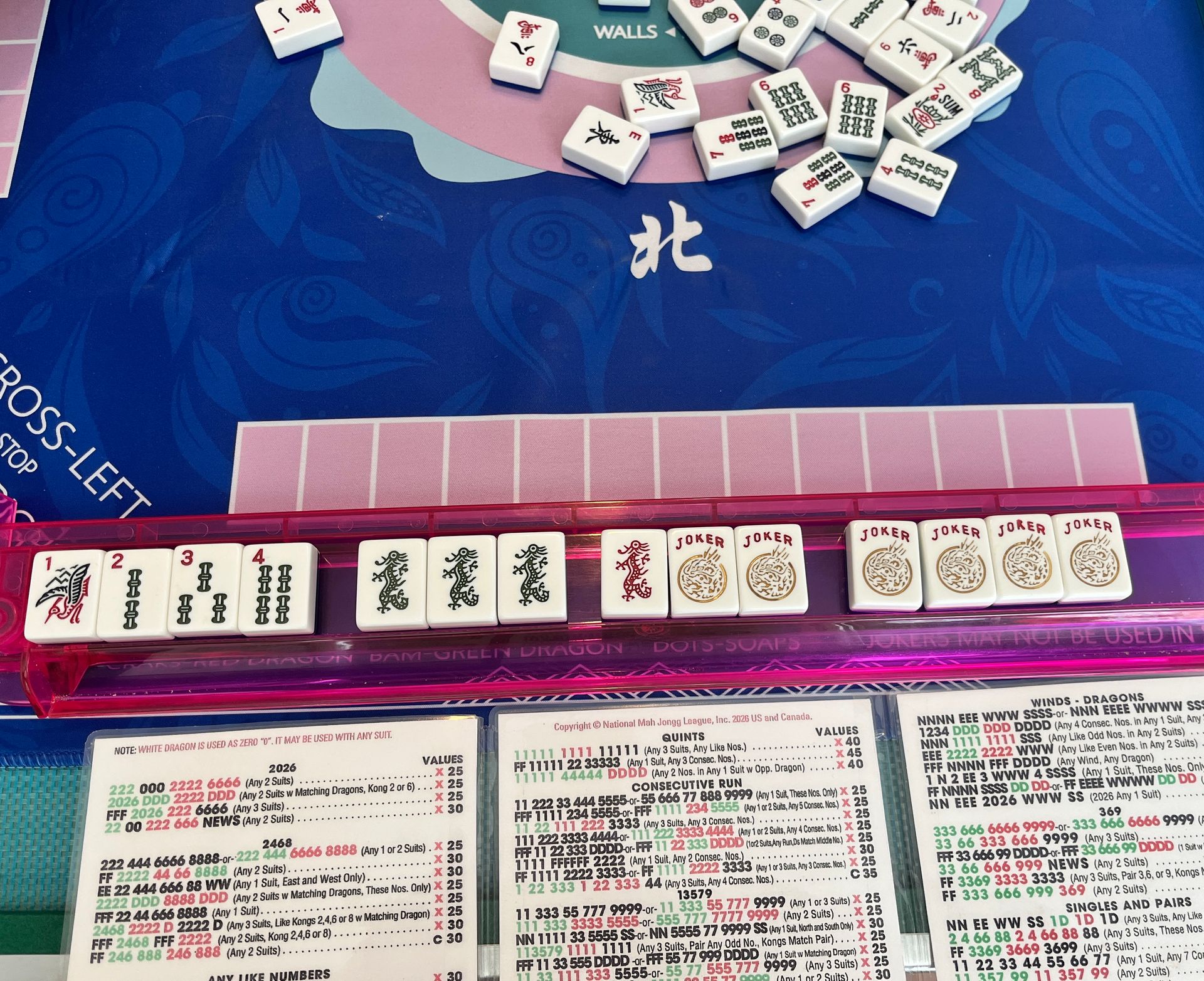
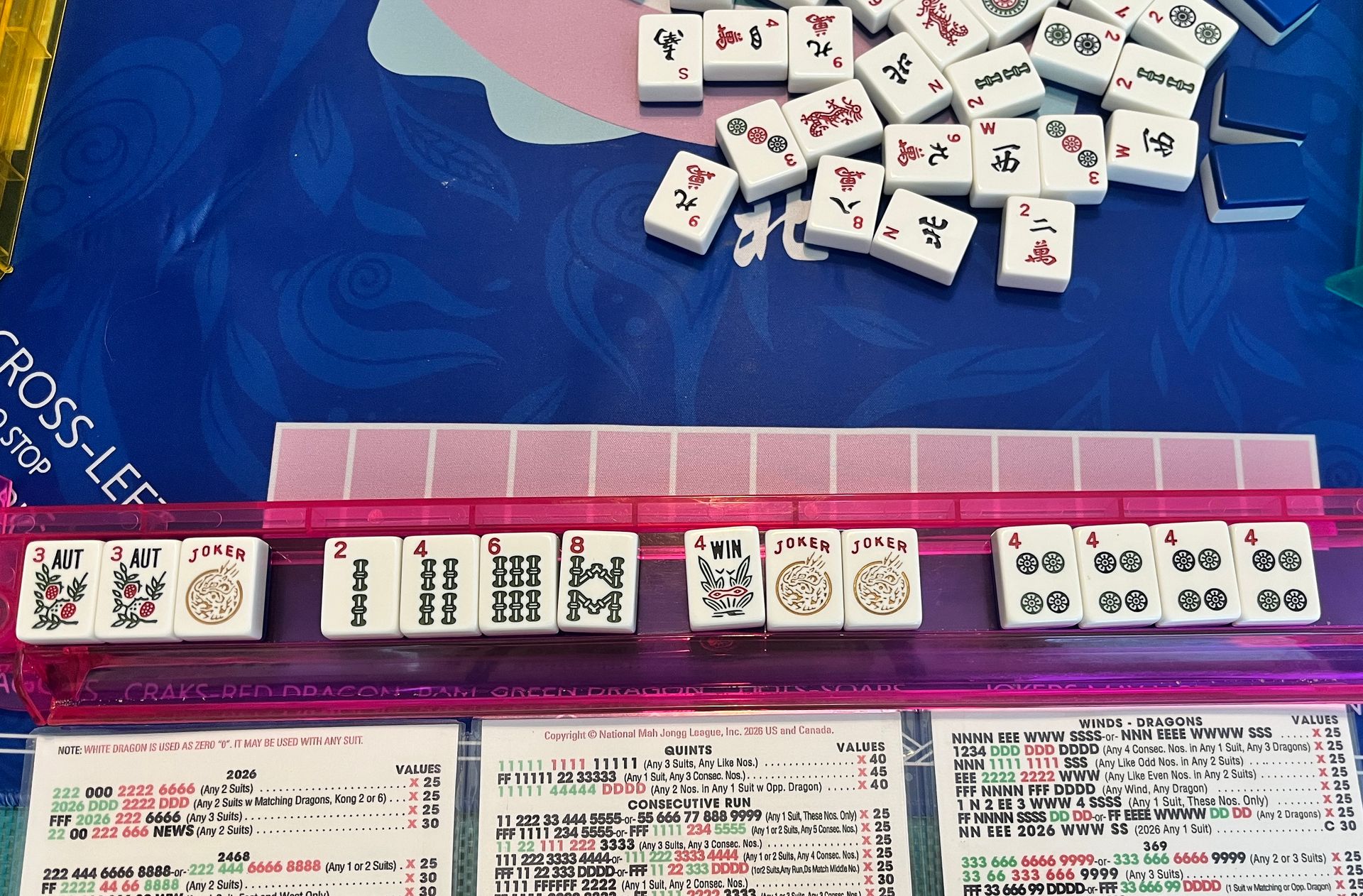
I wasn’t entirely surprised, if I’m being honest. I know how my brain works; the pattern recognition, the quick pivots, the comfort with ambiguity and partial information. These are muscles I’ve been building for years in boardrooms and strategy sessions and messy organizational pivots. Mahjong just gave them a new place to play.
But here’s what I didn’t fully appreciate until I was sitting at that table.
Of course I knew she was better. Forty years of playing versus two months! That math is obvious. What I wasn’t prepared for was the quality of it. My neighbor’s mother, eighty-five years old, is better in every way that matters. She decides faster. Pivots more cleanly. Reads the table with a quiet precision that looks effortless, which means it’s anything but. She gets to Mahjong more often. And she does all of it without any visible strain, carrying on a conversation, completely unbothered. No hesitation. No visible effort.
And she has friends like her. Women who play at a level so far beyond the rest of us that they won’t sit at our table. Not out of unkindness. We’re just too slow. They would be waiting on us all afternoon.
When the session ends, I go home and sleep for an hour. My brain is cooked. She moves on to the next thing, knitting, errands, reading, whatever the afternoon holds, like we just had coffee.
That gap is not about experience, though experience is part of it. It’s about what decades of this kind of thinking does to a mind. The strategic muscles aren’t just strong, they’re efficient. They’ve stopped burning extra energy on what’s already second nature.
I watched her and thought: this is what I want.
Not just to be good at Mahjong. But to still be playing at her level, sharp, present, delighted by the puzzle, forty years from now. The brain she’s maintained is not an accident. It’s a choice, made repeatedly, over a long time.
There’s a version of leadership that works the same way. The ability to read a room, assess what’s available, let go of a path that isn’t working, and move, not because you planned every step, but because you’ve practiced the underlying skill long enough that it lives in you.
She’s been doing that for forty years.
I have some catching up to do.
At Anthilles Consulting, we work with leaders navigating the kind of complexity that can’t be planned around, only practiced through.