
The Nervous System of Leadership – Part One
DC
When Competence Stops Growing and why high-performing leaders must return to beginner energy.
This article was written for Substack on 2/20/2026 The Nervous System of Leadership – Part one
This past weekend I attended a local art gallery that invites emerging artists from complete beginners to more advanced creators, to showcase their work. I have been to galleries and museums many times before, of course, comfortably walking through rooms filled with paintings on the walls. But this time felt entirely different.
Because one of the paintings was mine.
This Substack is reader-supported. To receive new posts and support my work, consider becoming a free or paid subscriber.
If you have been reading my column, you know I am new to this space. In fact, my first instinct was still to say, “I am not an artist.” But that is no longer true. I create, so I am an artist. What makes this moment even more meaningful is that I never painted with the intention of putting my work out into the world. The opportunity simply found me, and I decided to say yes. The exhibition theme was "Something Red"
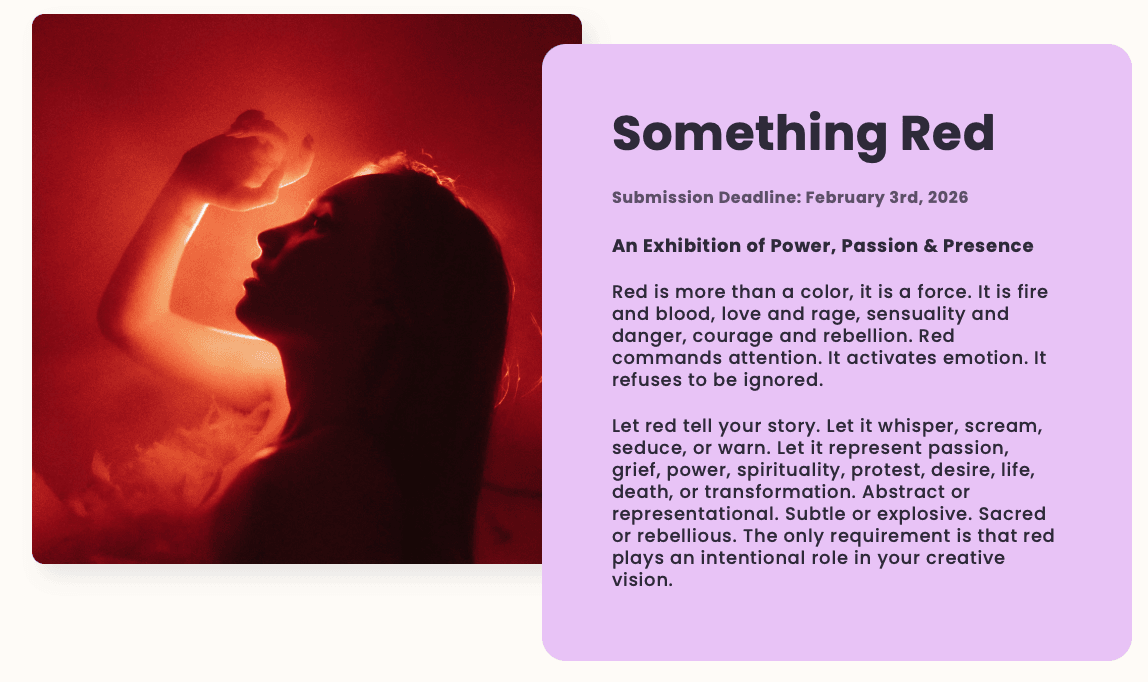
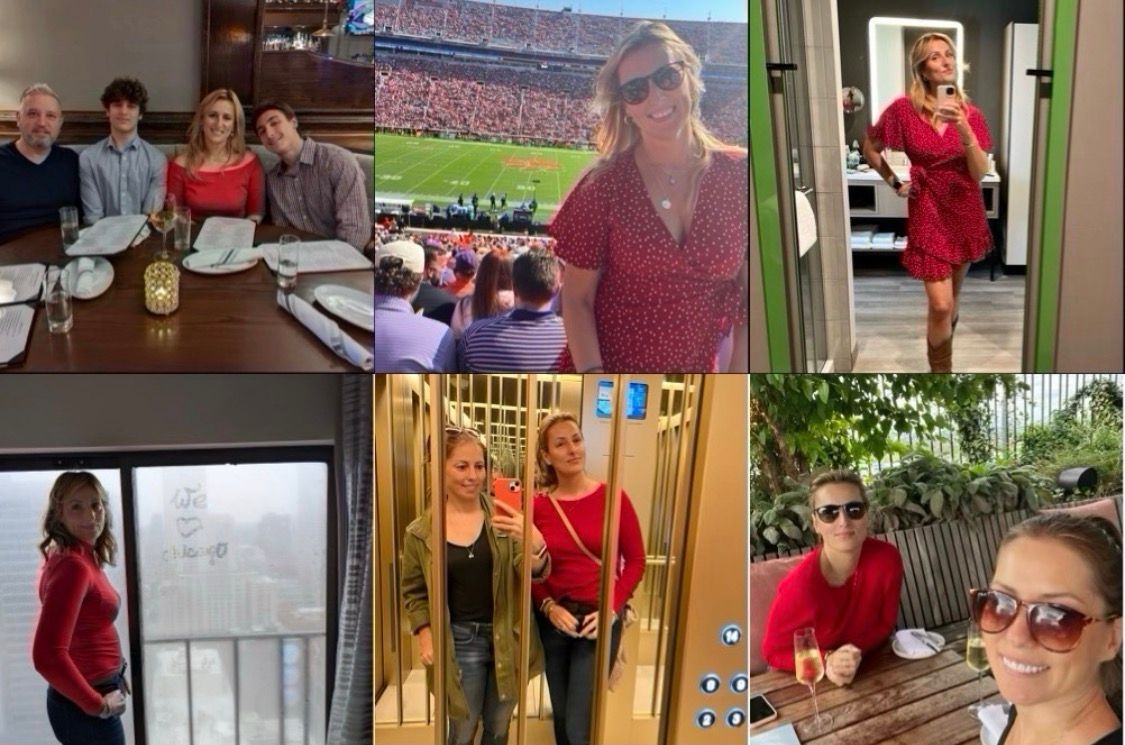
Red, for me, has always been a complicated color. Wearing red means you stand out, and for years I believed I did not look good in it. That, of course, turned out not to be true. I look beautiful in red, and over the past few years I have worn it more boldly and unapologetically. Interestingly, that shift happened at the same time I was growing into my confidence as a woman and as a business executive running multiple departments. As I began to fully own my knowledge and skills, showing up in color became part of that embodiment.
Then came my sabbatical, and with it the unexpected uncovering of artistic expression through painting. If you look at my body of work, my safe palette is obvious: greens, blues, blacks, and browns. Grounded colors. Controlled colors. Familiar territory. There was virtually no red in sight until Devotion, then The Guardian, and finally Quantum Faith.
But the real stretch was not the painting itself. It was being part of the exhibition.
I walked into the gallery with quiet composure, though somewhere underneath there was a small but persistent whisper: I don’t belong here. Still, I showed up fully present and allowed the evening to unfold without expectation.

What surprised me was what happened afterward.
As we were driving home, I felt tears begin to surface, unexpected, steady, and emotionally charged in a way I had not anticipated. It took me a moment to understand what was actually moving through me. And then it became clear.
For more than twenty years, I have lived inside competence. I have worn the hats of executive, mentor, and the person who “figures it out.” Even as I continued to evolve, learn, and collect certifications, I remained within professional environments where I understood the rules of the game and trusted my ability to perform.
This experience was different.
For the first time in decades, I had placed myself squarely in the position of a true beginner, visibly new, unpolished, and without the protective armor of expertise. What struck me most was not discomfort in the room itself, but the realization of how long it had been since I had allowed myself to feel this level of newness.
It was both humbling and emotionally disarming.
And it also revealed something important about leadership.
Many high-performing professionals, once established in their corporate identities, unintentionally stop putting themselves in environments that require true beginner energy. They continue to grow within their domain, of course, but often rely on frameworks and patterns that have worked for years (sometimes decades!) even as the complexity of the problems around them evolves.
This is not a failure of intelligence or capability. It is, more often, a quiet distance from the lived experience of not knowing.
I am not suggesting I now have some grand answer. But stepping into this unfamiliar creative space reminded me of something I believe many leaders forget: cultivating new experiences and genuine novice moments is not optional if we want to continue expanding our perspective.
And for those of us who lead others, the responsibility goes further. We are not only called to stretch ourselves, but also to create environments where the people around us are supported in doing the same where learning, experimentation, and even visible inexperience are treated not as weaknesses, but as necessary conditions for growth.
This experience stayed with me longer than I expected. Not just because of the vulnerability it surfaced, but because it raised a deeper question about how long high-performing leaders can operate without regularly returning to beginner energy. Over the past few months, I have been exploring what creates those conditions intentionally and what I discovered surprised me. I share that reflection in my next piece.